Understand the business first
We review your offer, audience and current website before deciding what each page needs to say.
Trusted by ambitious businesses







Brawnd brings strategy, design, development and growth thinking together. Your website gets a clear purpose before anyone starts designing a page.
We review your offer, audience and current website before deciding what each page needs to say.
Content, design and development follow the same brief, so important decisions do not get lost between teams.
Navigation and page structure reflect what visitors need to know before they are ready to enquire.
Mobile usability, loading speed, accessibility and search basics are considered during the build.
A manageable content system lets your team update pages, publish articles and add new offers.
We identify the actions worth tracking, so decisions after launch can be based on what people actually do.
We define who the site needs to reach, what each page should explain and which actions matter most.
↗ 02We design clear page layouts and interactions that work across phones, tablets and desktop.
↗ 03We build editable pages, responsive interactions and the integrations your project actually needs.
↗ 04We prepare search essentials, measurement and enquiry paths, then use evidence to guide improvements.
↗You need a website that explains what you do, answers early questions and gives people a way to get in touch.
Your services, audience or positioning have changed, but the website still tells the old story.
Visitors arrive, but too few take the next step. The message, page flow or enquiry path needs work.
Scope and delivery dates are agreed after we review your project.
Review your business, audience, current website and the result you need.
Agree the message, page structure and journeys visitors should be able to follow.
Design and build the approved experience across devices and the required CMS.
Check the site, forms and measurement at launch, then plan what to improve.
A straightforward view of what a website project involves, what affects the scope and what happens next.
We plan and build new websites, redesign sites that no longer represent the business, and improve pages or journeys that are underperforming. The scope can include strategy, content structure, UX, responsive design, development, SEO foundations and analytics.
Often, yes. We first look at what is working, what visitors struggle with and whether the existing platform can support the changes. If focused improvements will solve the problem, we will say so. If the structure or technology is holding the site back, we will explain what a rebuild would involve.
No. To begin, we need to understand the business, audience and goal. During planning, we identify the copy, images and other assets each page needs, agree who will supply them and include content deadlines in the project schedule. Final content is needed before launch.
Tell us what your business does, share your current site if you have one, and explain what needs to change. A target launch date is useful too. We review the brief, discuss the requirements with you and agree a written scope before work begins.
That depends on the number of pages, content readiness, approvals, integrations and any custom features. Once the scope is clear, we set milestones for strategy, design, development, review and launch. We will not give you a fixed date before understanding the work.
We quote for the work required, rather than applying one price to every website. After reviewing your goals, pages, content and technical needs, we give you a proposal that sets out the scope and cost. If there are sensible ways to phase the work, we can discuss them.
Yes, when content editing is part of the agreed build. We identify what your team needs to manage, such as pages, articles or images, and set up the publishing workflow accordingly. Any training or ongoing support can be agreed as part of the scope.
We check key pages, forms and device layouts as part of launch, then confirm any analytics and search setup included in the project. Ongoing optimisation, new pages and campaigns can be planned separately once there is real usage data to learn from.
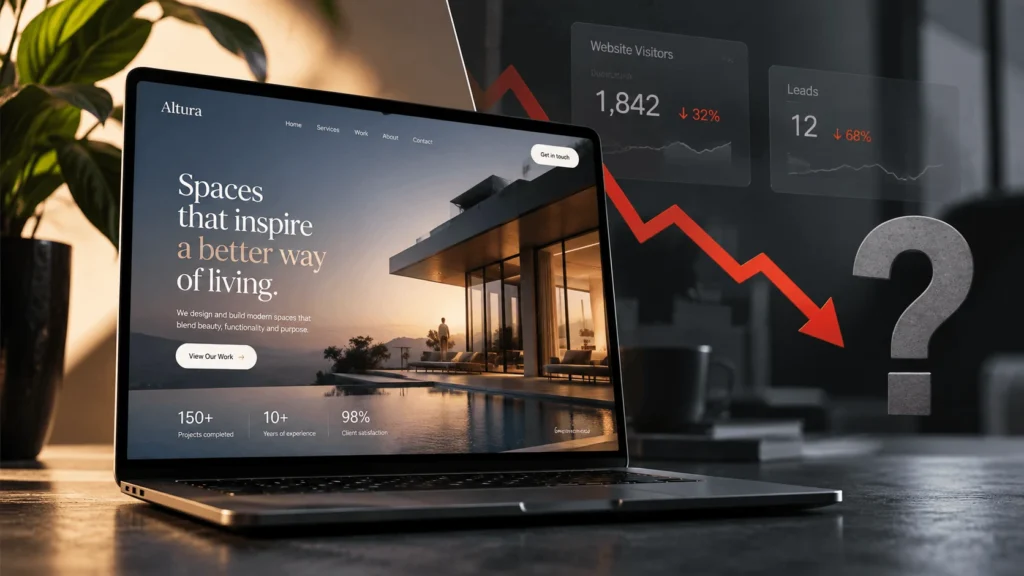
A beautiful website can still lose customers. Here is how to tell whether its design is helping your business grow.
Read the articleShare a few details about the business, your current site and the result you want. We will use them to start a useful conversation.